
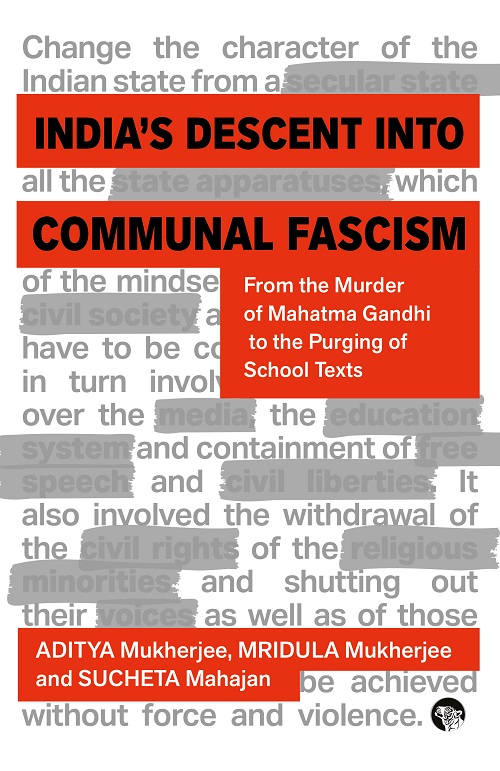


India’s Descent into Communal Fascism
Original price was: ₹499.00.₹449.00Current price is: ₹449.00.
A critical examination of communal ideology, historical revisionism and the politics of education in India. The authors explore Gandhi’s assassination, the RSS’s ideological foundations and debates surrounding India’s secular and democratic heritage.
| Author |
Aditya Mukherjee, Mridula Mukherjee and Sucheta Mahajan |
|---|---|
| ISBN |
9789363361270 |
| Year Of Publication |
2026 |
| Pages |
256 |
| Language |
English |
| Binding |
paperback |
| Publisher |
Speaking Tiger |
ISBN: 9789363361270
Year Of Publication:2026
Pages : 256
Language : English
Binding : paperback
Publisher: Speaking Tiger
The book investigates how interpretations of history influence the way citizens understand their country, its freedom movement and its diverse communities.
It focuses on the relationship between political ideology and historical education, examining how school curricula, textbooks and public narratives can influence collective memory.
1. Aditya Mukherjee
Aditya Mukherjee is an Indian historian and academic known for his research on modern Indian history, colonialism, nationalism and the Indian independence movement. He has been associated with the Centre for Historical Studies at Jawaharlal Nehru University (JNU), New Delhi.
2. Mridula Mukherjee
Mridula Mukherjee is a distinguished Indian historian specialising in modern Indian history, particularly the freedom struggle, nationalism and agrarian history. She has served as a professor and chairperson at the Centre for Historical Studies, JNU.
3. Sucheta Mahajan
Sucheta Mahajan is an Indian historian and academic whose research focuses on modern Indian history, nationalism, communalism and the politics of historical interpretation. She has been associated with the Centre for Historical Studies at JNU.
In India’s Descent into Communal Fascism, the authors examine the historical and ideological debates surrounding India's national identity.
The book begins by considering the importance of historical education in shaping how younger generations understand the freedom struggle and the country's pluralistic traditions.
It then investigates the ideological background of communal politics, with particular attention to the RSS and the circumstances surrounding Mahatma Gandhi's assassination in 1948. The authors discuss how competing interpretations of this history have influenced public understanding and educational narratives.







Reviews
There are no reviews yet.