
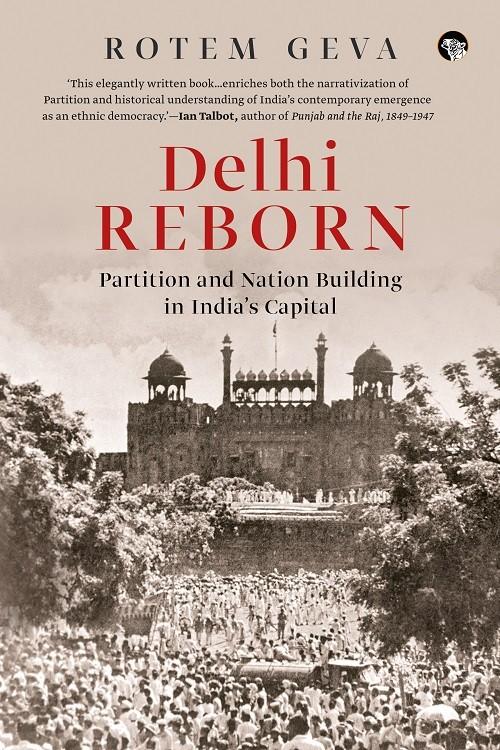
Delhi Reborn: Partition and Nation Building in India’s Capital
Original price was: ₹599.00.₹539.00Current price is: ₹539.00.
An insightful history of Delhi’s transformation during Partition and Independence, examining mass migration, communal violence, refugee resettlement, citizenship and the making of India’s postcolonial capital.
| Author |
Rotem Geva |
|---|---|
| ISBN |
9789354479847 |
| Year Of Publication |
2024 |
| Pages |
368 |
| Language |
English |
| Binding |
paperback |
| Publisher |
Speaking Tiger |
ISBN: 9789354479847
Year Of Publication:2024
Pages : 368
Language : English
Binding : paperback
Publisher: Speaking Tiger
This book explores the transformation of Delhi from a major centre of Mughal and colonial political life into the capital of an independent nation.
Rotem Geva treats decolonisation as a process that began before 1947 and continued into the mid-1950s. She examines the political mobilisation of the Muslim League and Congress, the growth of competing national identities and the consequences of Partition for Delhi's diverse communities.
Rotem Geva is a historian specialising in modern South Asian history, colonialism, decolonisation and urban political history. She is associated with the Hebrew University of Jerusalem, where her academic work focuses on the political and social transformations of South Asia.
The book begins in the late 1930s, examining how political developments and the growing demand for Pakistan influenced the imagination and political activities of Delhi's residents.
It explores the city's communal atmosphere before Partition and investigates why Delhi, previously known as an important centre of Muslim culture and intellectual life, experienced widespread violence in 1947.
A major section focuses on the enormous human displacement caused by Partition. The arrival of Hindu and Sikh refugees from Pakistan and the departure of Muslim residents transformed neighbourhoods, property ownership, public institutions and the city's demographic composition.



Reviews
There are no reviews yet.