
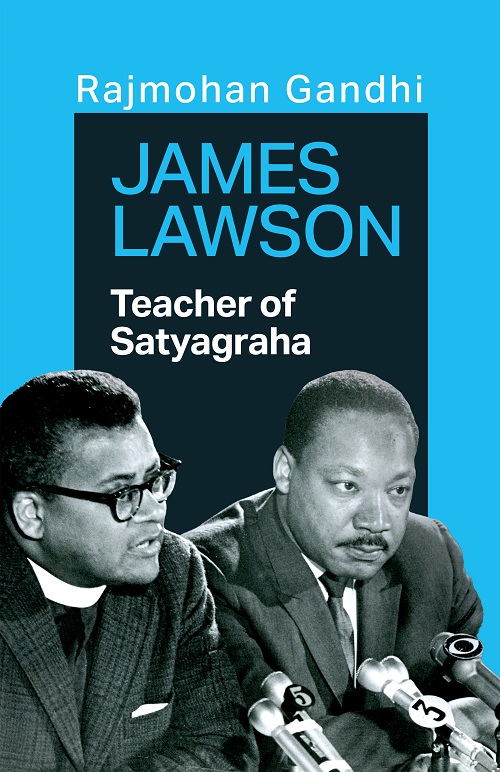
James Lawson: Teacher of Satyagraha
Original price was: ₹699.00.₹629.00Current price is: ₹629.00.
The biography of Reverend James Lawson, the American civil rights leader who adapted Gandhian Satyagraha into a powerful strategy against racial discrimination and segregation in the United States.
| Author |
Rajmohan Gandhi |
|---|---|
| ISBN |
9789363366015 |
| Year Of Publication |
2026 |
| Pages |
296 |
| Language |
English |
| Binding |
hardcover |
| Publisher |
Speaking Tiger |
ISBN: 9789363366015
Year Of Publication:2026
Pages : 296
Language : English
Binding : hardcover
Publisher: Speaking Tiger
This book examines the remarkable connection between India's philosophy of non-violence and America's struggle for racial equality. It highlights Lawson's role in bringing Gandhian principles into the American Civil Rights Movement and training activists in disciplined, non-violent protest.
Through personal memories, archival research and Lawson's own words, Rajmohan Gandhi presents a portrait of a man whose faith, courage and commitment to justice helped shape a historic movement.
Rajmohan Gandhi is an Indian historian, biographer, author and academic. He is the grandson of Mahatma Gandhi and has written extensively on Indian history, political leadership, peace and social justice.
His notable books include biographies of Mahatma Gandhi, Sardar Vallabhbhai Patel, C. Rajagopalachari and Khan Abdul Ghaffar Khan. His biography Rajaji: A Life received the Sahitya Akademi Award in 2002. He has also taught at the University of Illinois at Urbana-Champaign and several academic institutions in India.
James Lawson grew up in Ohio in a religious family and developed an early commitment to Christian principles of peace and justice. During the Korean War, his refusal to participate in military service as a conscientious objector led to imprisonment.
His intellectual and spiritual journey eventually brought him to India, where he studied Gandhian philosophy and explored the practical possibilities of non-violent resistance. During his stay in Nagpur in the 1950s, he developed a deeper understanding of Satyagraha and its potential to challenge institutional injustice.




Reviews
There are no reviews yet.