
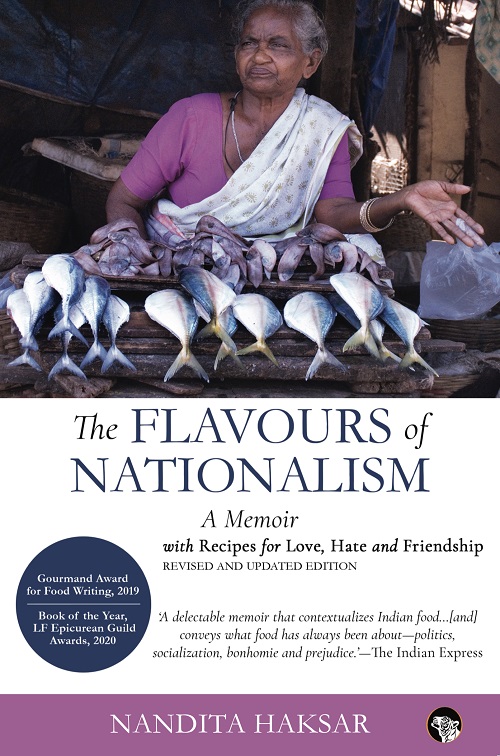
The Flavours of Nationalism
Original price was: ₹499.00.₹449.00Current price is: ₹449.00.
A thought-provoking memoir exploring the connection between Indian food, nationalism, politics and social identity. Nandita Haksar combines family memories, travel experiences, political observations and traditional recipes to examine how food reflects caste, class, religion and cultural diversity.
| Author |
Nandita Haksar |
|---|---|
| ISBN |
9789354471131 |
| Year Of Publication |
2022 |
| Pages |
256 |
| Language |
English |
| Binding |
paperback |
| Publisher |
Speaking Tiger |
ISBN: 9789354471131
Year Of Publication:2022
Pages : 256
Language : English
Binding : paperback
Publisher: Speaking Tiger
The book uses food as a lens through which to understand India's complex social and political landscape. It examines how eating habits, culinary traditions and shared meals are influenced by historical experiences, religious beliefs and social hierarchies.
The author revisits important debates about vegetarianism, beef consumption, caste discrimination and the relationship between food and national identity. She also reflects on the ideas of Mahatma Gandhi and Dr B. R. Ambedkar concerning inter-dining and social equality.
- Nandita Haksar is an Indian human-rights lawyer, activist, writer and political commentator. She is known for her work on civil liberties, minority rights, migration and human-rights issues, particularly in Northeast India.
Her writing explores the connections between law, politics, identity, nationalism and social justice. Her other notable books include The Exodus Is Not Over, Framed as a Terrorist and Across the Chicken Neck: Travels in Northeast India.
Nandita Haksar begins with memories of her childhood in the 1950s, recalling the food traditions and wedding feasts of her Kashmiri Pandit family settled in Old Delhi and Lucknow.
As the narrative progresses, food becomes a way of understanding her political awakening, feminist beliefs and involvement in human-rights activism. She recounts her experiences working with the Naga community in Manipur, listening to the stories of women employed in Kerala's fisheries and witnessing the effects of globalisation on livelihoods in Goa.
The author examines how food practices are shaped by caste, class, religion, race and gender. She also discusses the controversies surrounding beef-eating, vegetarianism and the categorisation of food as Hindu or Muslim.











Reviews
There are no reviews yet.