
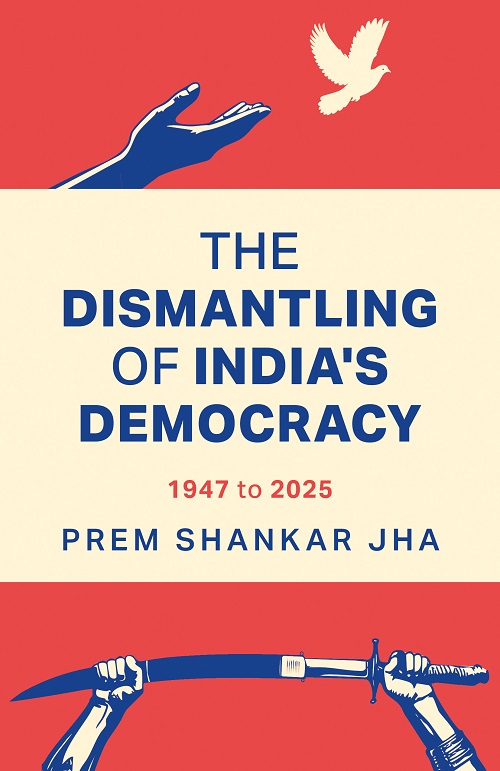

The Dismantling of India’s Democracy: 1947 to 2025
Original price was: ₹599.00.₹539.00Current price is: ₹539.00.
A thought-provoking study of India’s democratic journey from 1947 to 2025. Prem Shankar Jha examines the weakening of democratic institutions, electoral processes, constitutional safeguards and political accountability, raising important questions about the future of Indian democracy.
| Author |
Prem Shankar Jha |
|---|---|
| ISBN |
9789354477508 |
| Year Of Publication |
2025 |
| Pages |
372 |
| Language |
English |
| Binding |
paperback |
| Publisher |
Speaking Tiger |
ISBN: 9789354477508
Year Of Publication:2025
Pages : 372
Language : English
Binding : paperback
Publisher: Speaking Tiger
India's democracy was built on the principles of constitutional governance, pluralism, diversity and equal citizenship. However, the functioning of its institutions and the protection of these principles have faced growing challenges over the decades.
In this book, Prem Shankar Jha traces the historical and political developments that, in his view, have contributed to the weakening of Indian democracy. He examines the shortcomings of the constitutional framework, the influence of money in elections, the growth of political patronage and the increasing concentration of power.
Prem Shankar Jha is an Indian journalist, political commentator, economist and author. He is known for his writings on Indian politics, international relations, economic policy and the changing nature of democratic institutions.
Over several decades, he has written extensively about India's political economy, global affairs, governance and the relationship between economic power and political authority. His work combines historical analysis with commentary on contemporary political developments.
Beginning with India's Independence in 1947, Prem Shankar Jha examines the evolution of the country's democratic institutions and the political decisions that have shaped their development.
The author argues that certain structural weaknesses in the Constitution, particularly the absence of state-funded election financing, created vulnerabilities in the democratic system. He examines how changes in political funding contributed to the growth of opaque financial networks and the increasing influence of money in politics.






Reviews
There are no reviews yet.