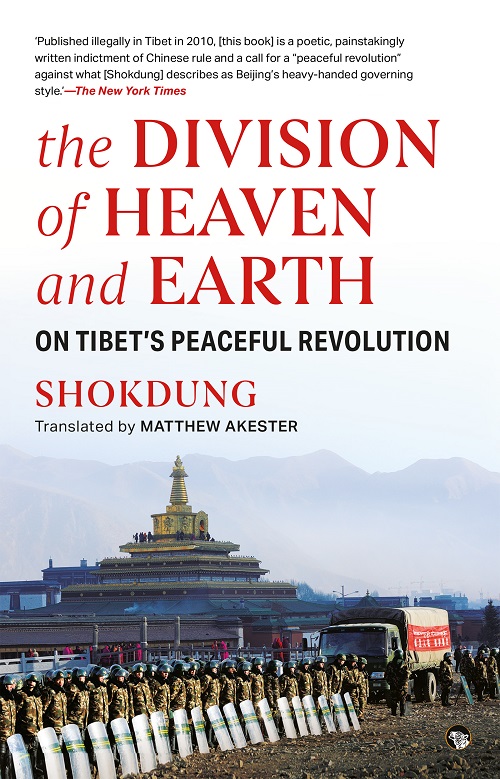
The Division of Heaven and Earth: On Tibet’s Peaceful Revolution
Original price was: ₹399.00.₹359.00Current price is: ₹359.00.
A compelling account of Tibet’s peaceful protest movement and the reawakening of Tibetan national consciousness. Shokdung examines political repression, cultural identity, human rights and the possibilities of non-violent resistance.
| Author |
Shokdung (Tagyal) |
|---|---|
| ISBN |
9789363368934 |
| Year Of Publication |
2017 |
| Pages |
176 |
| Language |
English |
| Binding |
paperback |
| Publisher |
Speaking Tiger |
ISBN: 9789363368934
Year Of Publication:2017
Pages : 176
Language : English
Binding : paperback
Publisher: Speaking Tiger
The protests that began in Tibet in March 2008 marked a significant turning point in modern Tibetan history. Demonstrations and expressions of solidarity spread across the Tibetan plateau, reflecting widespread concerns about political freedom, cultural identity and the future of Tibetan society.
In this book, Shokdung explores the significance of these events and their impact on Tibetan national consciousness. He examines the nature of authoritarian governance, the restrictions experienced by Tibetans and the challenges of preserving cultural and religious identity.
Shokdung (Tagyal) is the pen name of a prominent contemporary Tibetan intellectual and writer. His work examines Tibetan identity, political freedom, cultural preservation and the relationship between Tibet and Chinese state authority.
He wrote The Division of Heaven and Earth following the widespread protests in Tibet in 2008. The book attracted considerable attention for its critical examination of government policies and its advocacy of peaceful political change. Following its publication, he was detained and imprisoned for nearly six months in 2010.
The Division of Heaven and Earth is organised around three central emotions: joy, sorrow and fear.
In the section on joy, Shokdung considers the importance of the 2008 demonstrations and their role in awakening a renewed sense of Tibetan solidarity. He reflects on the courage of people who publicly expressed their aspirations for freedom, equality and cultural rights.
The section on sorrow examines the political and social conditions in Tibet. The author discusses authoritarianism, restrictions on individual freedom and the consequences of government policies for Tibetan communities.


Reviews
There are no reviews yet.