
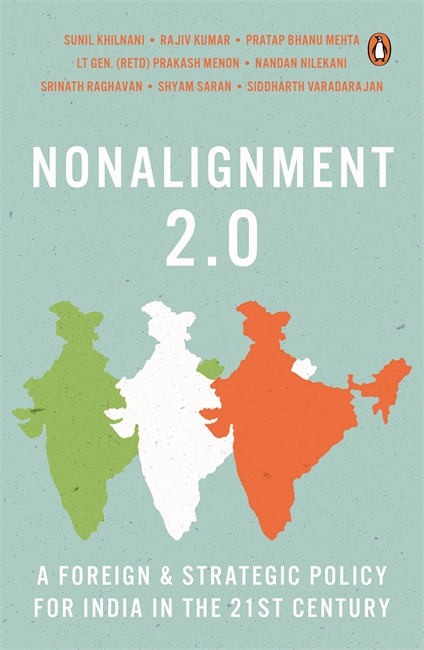

Nonalignment 2.0: A Foreign and Strategic Policy for India in the 21st Century
Original price was: ₹299.00.₹205.00Current price is: ₹205.00.
A strategic policy blueprint examining India’s place in the world, its national interests, global challenges and the future of non-alignment.
| Author Name |
Sunil Khilnani, Rajiv Kumar, Pratap Bhanu Mehta, Lt Gen. (Retd) Prakash Menon, Nandan Nilekani, Srinath Raghavan, Shyam Saran, Siddharth Varadarajan |
|---|---|
| ISBN |
9780143423478 |
| Year of Publication |
2014 |
| Pages |
224 |
| Language |
ENGLISH |
| Binding |
PAPERBACK |
| Publisher |
Penguin |
1 in stock
ISBN:9780143423478
Year Of Publication: 2014
Pages :224
Language : English
Binding : Paperback
Publisher: Penguin
The book reassesses the idea of non-alignment in the context of a rapidly changing global order. Rather than treating non-alignment solely as a legacy of the Cold War, the authors explore how strategic autonomy can remain relevant to India's foreign policy in the twenty-first century.
It considers India's economic development, security environment, relations with major powers, regional interests and position in the international system. The authors also stress the importance of building broad domestic consensus among political parties, government, business, civil society and the media.
Sunil Khilnani is a scholar of Indian politics and history and is one of the principal contributors to the volume. The other contributors include economist Rajiv Kumar, political theorist Pratap Bhanu Mehta, military strategist Lt Gen. (Retd) Prakash Menon, technology entrepreneur Nandan Nilekani, historian and strategic affairs scholar Srinath Raghavan, former diplomat Shyam Saran, and journalist Siddharth Varadarajan. Together, they bring perspectives from political science, economics, diplomacy, defence, technology, history and journalism.
Nonalignment 2.0 examines the principles and national goals that should guide India's foreign and strategic policy over the following decade. It identifies opportunities available to India in the international arena while also analysing security, economic and geopolitical challenges.
A central argument is that although the original Non-Aligned Movement emerged from the Cold War, the underlying idea of maintaining freedom of strategic choice can still be valuable. The book therefore advocates an updated form of non-alignment focused on strategic autonomy—allowing India to make independent decisions on matters of vital national interest.
The authors also emphasise that India's international ambitions must be supported by domestic development, institutional strength and consensus. The result is a significant contribution to discussions about India's role in the changing global order.










Reviews
There are no reviews yet.