
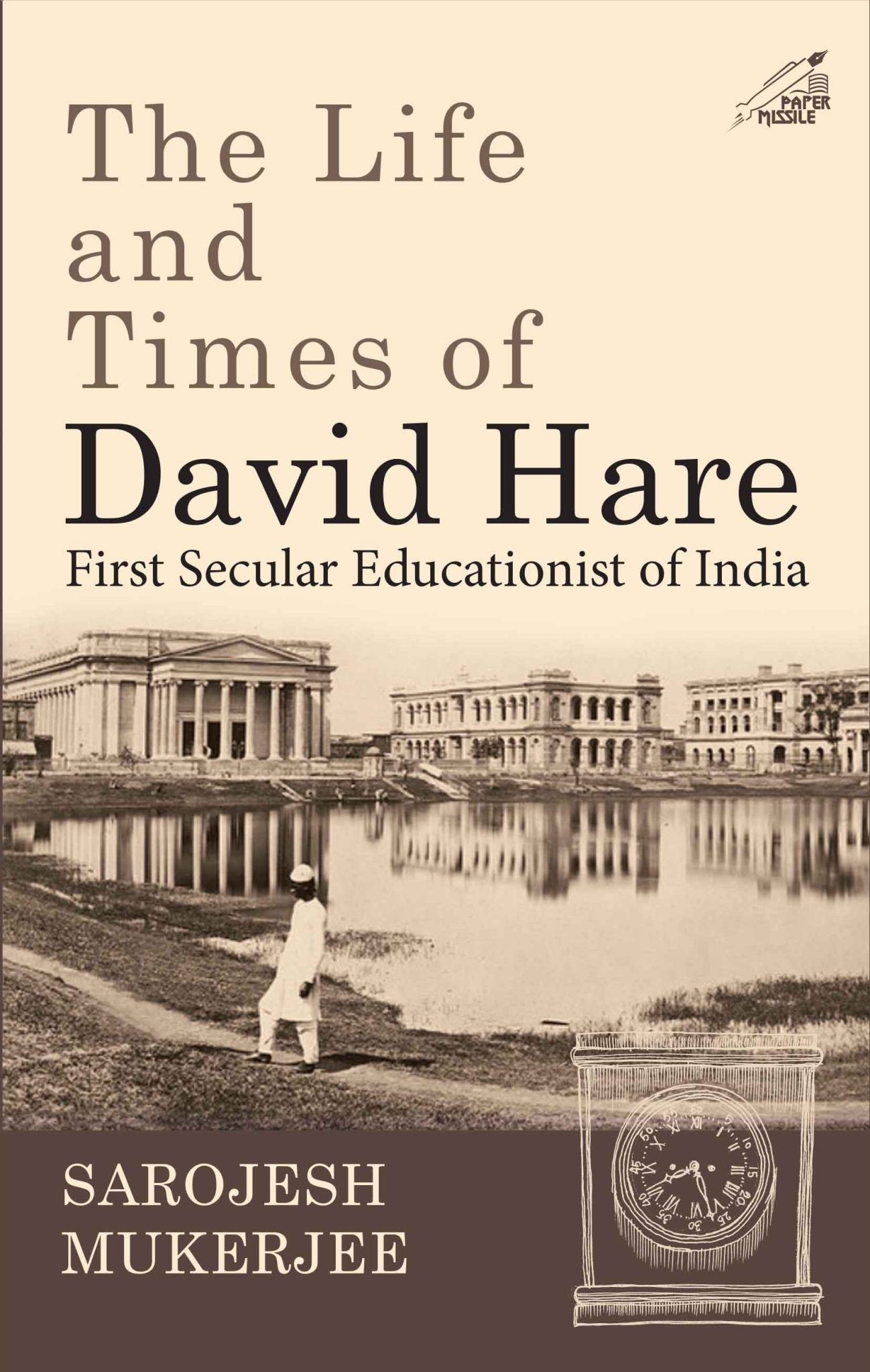

The Life and Times of David Hare: First Secular Educationist of India
Original price was: ₹795.00.₹790.00Current price is: ₹790.00.
A fascinating biography of David Hare, the Scottish humanitarian who dedicated his life to promoting modern and secular education in colonial India. Sarojesh Mukerjee explores Hare’s contribution to Bengal’s educational institutions, the Bengal Renaissance and the transformation of Indian society during the nineteenth century.
| Author |
Sarojesh Mukerjee |
|---|---|
| ISBN |
9788196405380 |
| Year Of Publication |
2024 |
| Pages |
163 |
| Language |
English |
| Binding |
hardcover |
| Publisher |
Niyogi Books |
ISBN: 9788196405380
Year Of Publication:2024
Pages : 163
Language : English
Binding : hardcover
Publisher: Niyogi Books
This book examines David Hare's life against the historical, political and educational background of colonial Bengal.
It traces his journey from a watchmaker in Calcutta to a respected educationist and philanthropist who worked tirelessly for the advancement of Indian society.
Major themes include:
-
The arrival of David Hare in Calcutta in 1801.
-
His growing interest in Indian society and education.
-
The development of modern education in Bengal.
-
His contribution to Hindu College and Hare School.
-
The importance of the Calcutta School Book Society.
Sarojesh Mukerjee is a historian and educationist with an interest in colonial and early modern Indian history, particularly the development of modern education and intellectual culture.
He studied at Knox College in the United States, where his interest in history as part of a liberal arts education developed further. He is also the founder of Cambridge School, Calcutta, where he teaches economics and occasionally history.
His research into David Hare began with questions about the origins of English and modern education in India. The result is this biography, which combines historical investigation with an accessible narrative of a significant period in Bengal's history.
David Hare arrived in Calcutta at the beginning of the nineteenth century with the intention of earning a living through watchmaking. However, his close association with Indian society gradually changed the direction of his life.
Witnessing poverty, social inequality and limited access to education, he became convinced that modern learning was essential for the progress of Indians. He believed that education could help people develop their intellectual abilities and improve their social and economic circumstances.



Reviews
There are no reviews yet.