
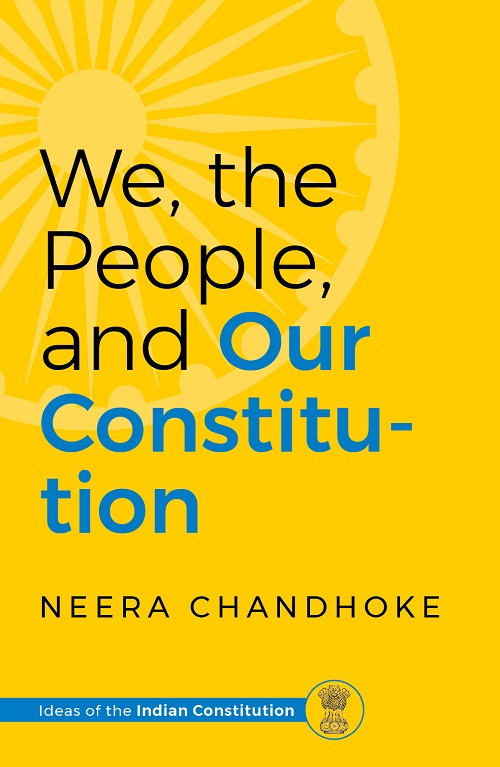

We, the People, and Our Constitution
Original price was: ₹399.00.₹359.00Current price is: ₹359.00.
An insightful examination of the Indian Constitution, exploring its historical foundations, democratic ideals and enduring role in protecting freedom, equality, justice and citizenship.
| Author |
Neera Chandhoke |
|---|---|
| ISBN |
9789354476686 |
| Year Of Publication |
2024 |
| Pages |
156 |
| Language |
English |
| Binding |
paperback |
| Publisher |
Speaking Tiger |
ISBN: 9789354476686
Year Of Publication:2024
Pages : 156
Language : English
Binding : paperback
Publisher: Speaking Tiger
Part of the Ideas of the Indian Constitution series, this book examines the historical development and philosophical foundations of India's constitutional democracy.
It explores:
-
The evolution of constitutional ideas during India's freedom movement.
-
The principles of fraternity, equality, secularism and justice.
-
The contribution of the Constituent Assembly.
-
The Constitution as a political, moral and legal document.
-
The role of the judiciary and civil society in protecting citizens.
-
The relationship between constitutional values and democratic citizenship.
Neera Chandhoke is an eminent Indian political scientist and academic. She is a Distinguished Fellow at the Centre for Equity Studies, New Delhi, and was formerly Professor of Political Science and Director of the Developing Countries Research Centre at the University of Delhi.
Her research focuses on democracy, political theory, secularism, social justice and Indian politics. Her notable books include Violence in Our Bones, Rethinking Pluralism, Secularism, Tolerance: Anxieties of Coexistence, Democracy and Revolutionary Politics and Contested Secessions. She regularly contributes to public discussions on democracy and contemporary political issues
We, the People, and Our Constitution examines how India's Constitution emerged from a long struggle for freedom, equality and democratic self-government.
Neera Chandhoke traces the development of constitutional thinking through important historical documents and political initiatives, beginning with the Constitution of India Bill of 1895. She discusses the Commonwealth of India Bill of 1925, the Motilal Nehru Report of 1928 and the constitutional discussions that eventually led to the Constituent Assembly.
The book highlights how the Constitution transformed the aspirations of the freedom movement into a framework for independent India. It explores the importance of equality, fraternity, secularism and justice, explaining how these values help sustain a diverse democratic society.






Reviews
There are no reviews yet.