






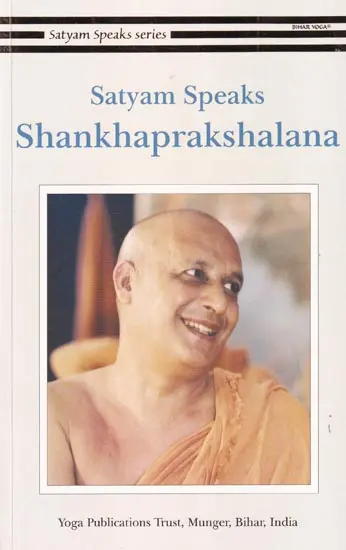

Kundalini Tantra (Original From Bihar School)
Original price was: ₹800.00.₹699.00Current price is: ₹699.00.
Kundalini Tantra is Swami Satyananda Saraswati’s seminal work of kundalini, chakras and kriya yoga. Defining and explaining kundalini, this book provides a detailed account of kundalini awakening, including the signs and effects of such experiences and ways to both elicit and manage them.
The book contains a comprehensive description of each chakra and significance of the chakras in tantric and yogic practice. Techniques are given to balance each centre for greater harmony in mind, body and spirit, and in preparation for the rising of kundalini Shakti. The 20 kriyas and their preparatory practices are fully elucidated.
Includes colour plates, diagrams and charts
| Author Name |
Swami Satyananda Saraswati |
|---|---|
| ISBN |
9788185787152 |
| Year of Publication |
2018 |
| Pages |
453 |
| Language |
English |
| Binding |
Paperback |
| Publisher |
Yoga Publications Trust |
ISBN: 9788185787152
Year Of Publication: 2018
Pages : 453
Language : English
Binding : Paperback
Publisher: Yoga Publications Trust
IntroductionI have been traveling the world for the last three decades in order to pass on the message of yoga, and I find that yoga has influenced the course of human thinking tremendously. Initially of course, there was some doubt about it as many people thought that yoga was a type of religion, witchcraft or mysticism. This particularly happened because man believed matter was the ultimate point in the evolution of nature. The materialistic world did not understand yoga for some time, but as scientists dived deep into the mysteries of matter, they came to understand and realize that matter was not the ultimate in the evolution of nature.
If that is so for one form of matter, it applies to every form of matter. This external experience, the perception you have through your senses, is a product of matter. Even your thoughts, feelings, emotions and cognitions are products of matter. Therefore, they cannot be absolute and final. This means there must be another realm of experience, and if there is another realm of experience, it must be possible to transcend the present limitations of the mind.
The mind is also matter; it is definitely not spirit. Therefore, the mind can also be transformed and made to evolves. Many people have begun to realize and experience this fact in the last in the last few decades. In my opinion, this marks the end of one era and the beginning of another. For those who have some knowledge of science and the nature of matter, it is not difficult to understand exactly what inner experience is.
An inner experience is the manifestation of a deeper level of oneself. Dream, of course, is an experience. Your dreams may be schizophrenic, but that is an expression of your own self. Thought is also a concept or expression of your own self. A piece of music is an expression of your self, whether you compose it or just admire it. A painting or sculpture is a concept of your self whether you create it or just admire it. That means the external world is a manifestation of your inner experience, and you can improve this experience to nay extent. You can also bring about deterioration of this experience. When everything is hopeless outside, that is you experience of yourself, and if everything is beautiful outside, that is also your experience of yourself.
In the last few decades, yoga has helped millions of people to improve their self-concept. Yoga realizes that man is not only the mind, but the body as well. Therefore, one does not experience happiness only through the mind. The body is also real and it is a part of one's personality. Just improving the condition of the body, however, will not necessarily enable the mind to experience happiness either. This is because man is not only the body and mind, but emotion and desire as well. He is something beyond the mind or psyche. Therefore, yoga has been designed in such a way that it can complete the process of evolution of the personality in every possible direction. That is why yoga has so many branches hatha yoga, bhakti yoga, raja yoga, jnana yoga, and so on.
A combined, integrated practice of yoga in one's life will definitely ensure a better quality of experience within you and without. Every seeker and practitioner on the path of yoga must remember that the various paths of yoga are to improve the quality of head, heart and hands. However, yoga does not end with the development of the personality. One level of the personality is dependent on this mind, this body and these emotions, but there is another deeper part of the personality which you have to develop with another kind of mind and emotion. This requires a special process, and that process is known as kundalini yoga
Sri Swami Satyananda Saraswati (1923–2009) was an internationally acclaimed yoga master, spiritual teacher, and founder of the Bihar School of Yoga (1963). A direct disciple of Swami Sivananda Saraswati of Rishikesh, he spent over twelve years in rigorous spiritual service (seva) before traveling extensively to spread the teachings of yoga across the globe.
A visionary scholar and author of over 80 classic books on yoga, tantra, and meditation, Swami Satyananda adapted ancient yogic techniques to suit modern lifestyle and health needs. His teachings—grounded in scientific application and spiritual wisdom—continue to guide millions of seekers worldwide.
CONTENTS
| Introduction to Kundalini and Tantra | 1 |
| Kundalini | |
| 1. Ye Man, Tame the Kundalini | 9 |
| 2. What is Kundalini? | 13 |
| 3. Kundalini Physiology | 21 |
| 4. Kundalini and the Brain | 31 |
| 5. Methods of Awakening | 37 |
| 6. Preparing for the Awakening | 48 |
| 7. Diet for Kundalini Awakening | 59 |
| 8. Risks and Precautions | 64 |
| 9. Kundalini and Madness | 72 |
| 10. Four Forms of Awakening | 76 |
| 11. The Descent of Kundalini | 81 |
| 12. The Experiences of Awakening | 86 |
| 13. The Path of Kriya Yoga | 93 |
| 14. Vama Marga and Kundalini Awakening | 101 |
| The Chakras | |
| 15. Introduction to the Chakras | 113 |
| 16. Evolution through the Chakras | 119 |
| 17. Ajna Chakra | 127 |
| 18. Mooladhara Chakra | 137 |
| 19. Swadhisthana Chakra | 146 |
| 20. Manipura Chakra | 156 |
| 21. Anahata Chakra | 162 |
| 22. Vishuddhi Chakra | 173 |
| 23. Bindu Visarga | 180 |
| 24. Sahasrara and Samadhi | 189 |
| Kundalini Yoga Practice | |
| 25. Rules and Preparation | 197 |
| 26. Posture | 201 |
| 27. Chakra Sadhana Course | 209 |
| 28. Practices for Ajna Chakra | 211 |
| 29. Practices for Mooladhara Chakra | 219 |
| 30. Practices for Swadhisthana Chakra | 226 |
| 31. Practices for Manipura Chakra | 229 |
| 32. Practices for Anahata Chakra | 238 |
| 33. Practices for Vishuddhi Chakra | 245 |
| 34. Practices for Bindu Visarga | 251 |
| 35. Practices for Integrated Chakra Awareness | 259 |
| 36. Your Sadhana Program | 277 |
| 37. Kundalini Kriyas of Kriya Yoga | 279 |
| 38. The Kriya Yoga Practices | 284 |
| Kundalini Research | |
| 39. Introduction | 319 |
| 40. Kundalini, Fact not Fiction | 324 |
| 41. Defining the Nadis | 330 |
| 42. Controlling the Nadis and the Brain | 338 |
| 43. Evidence for the Existence of Nadis | 350 |
| 44. Neurophysiology of the Chakras | 358 |
| 45. Evidence for the Existence of Chakras | 370 |
| 46. The Cosmic Trigger | 380 |
| 47. Cross-Cultural Evidence | 395 |
| 48. Analysis of the Chakras from a Psychophysiological Viewpoint | 402 |
| Appendix | 427 |
| Glossary | 433 |
| References | 446 |
| Index of Practices | 451 |





Reviews
There are no reviews yet.