
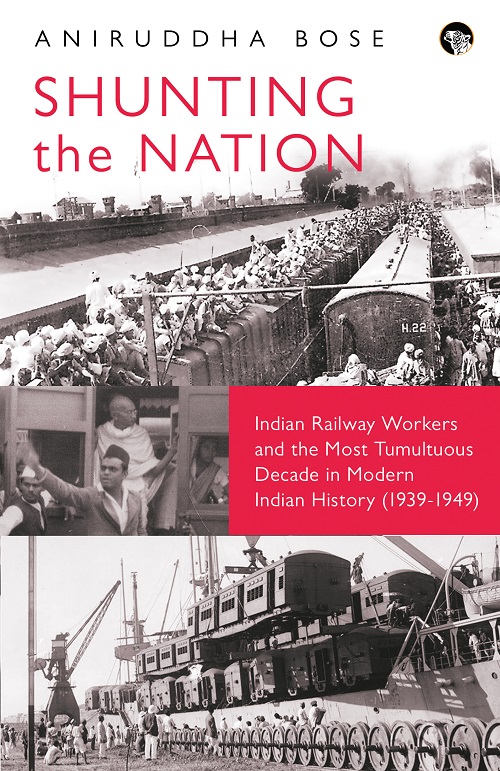

Shunting the Nation: India’s Railway Workers and the Most Tumultuous Decade in Modern Indian History (1939–1949)
Original price was: ₹599.00.₹539.00Current price is: ₹539.00.
A compelling account of Indian railway workers during the tumultuous decade of 1939–1949. The book examines their contribution during World War II, the freedom struggle and Partition, revealing the human stories behind one of India’s most important public institutions.
| Author |
Aniruddha Bose |
|---|---|
| ISBN |
9789354475290 |
| Year Of Publication |
2023 |
| Pages |
240 |
| Language |
English |
| Binding |
paperback |
| Publisher |
Speaking Tiger |
ISBN: 9789354475290
Year Of Publication:2023
Pages : 240
Language : English
Binding : paperback
Publisher: Speaking Tiger
Between 1939 and 1949, India experienced war, political unrest, mass mobilisation and the trauma of Partition. Throughout this period, the railway network remained vital to the country's economy, administration and public life.
Aniruddha Bose focuses on the railway employees who worked through these extraordinary circumstances. He explores their working conditions, professional responsibilities, political loyalties and the role of railway unions. The narrative also considers how class solidarity sometimes helped workers overcome the divisions created by communal politics.
Aniruddha Bose is an author and researcher whose work explores Indian history, society and institutions. In Shunting the Nation, he examines the history of Indian railway workers through archival material, memoirs, newspaper reports and government documents.
The book reflects his interest in bringing lesser-known historical experiences into the wider narrative of India's freedom struggle and Partition.
The decade from 1939 to 1949 transformed India. The Second World War placed enormous demands on the railway system, while the Quit India Movement and the final struggle for independence created further political and administrative challenges.
Railway workers occupied a unique position during this period. They were employed by a colonial institution but were also part of a society increasingly demanding freedom. Their responsibilities included maintaining transport services, moving essential supplies and responding to the enormous human movement caused by Partition.





Reviews
There are no reviews yet.